




Chin augmentation is an aesthetic surgery procedure that increases the projection and size of the chin using implants or sliding genioplasty. Using these techniques, Dr. Janiga can reshape facial contour for better balance, improve jawline definition, and enhance facial harmony in relation to other facial features. This overview explains the main chin augmentation options, what to expect before and after surgery, how the procedure and recovery typically work, and when it may be combined with treatments like a neck lift or chin fat reduction to improve facial appearance and confidence when planned in relation to the rest of the face. Patients with an undefined or small chin may be good candidates for chin surgery to improve facial balance and harmony.
There are several ways that Dr. Janiga can perform this procedure, including surgical and non-surgical approaches such as implants, sliding genioplasty, and dermal fillers.
Chin implant surgery helps strengthen and increase the prominence of the chin, restoring facial harmony with balanced facial features. The chin implant size and shape are carefully chosen to sit comfortably over the patient’s chin bone and create a natural-looking result, and most implants are made from biocompatible materials such as silicone.
A chin augmentation without chin implants is also known as a sliding genioplasty. It is a highly technical orthognathic surgery, also called osseous genioplasty, that requires the expertise of a qualified plastic surgeon. This technique reshapes the chin by reshaping the patient’s own tissue and sliding the chin bone forward to increase chin prominence, which can correct microgenia in appropriate skeletal cases and improve facial harmony.
Dermal fillers can also enhance the chin profile using hyaluronic acid or calcium hydroxylapatite, with temporary results, little downtime, and changes that can often be adjusted or reversed. Fat grafting uses the patient’s own fat to add volume and contour to the chin area.
Before a facial chin augmentation at JanigaMDs, patients will schedule a consultation with board-certified plastic surgeon Dr. Timothy Janiga to discuss the procedure in greater detail, determine whether they are good candidates, and evaluate his extensive facial cosmetic surgery experience, including how many chin augmentations he has performed. As with any cosmetic procedure, the consultation also includes reviewing candidacy, risks, and realistic expectations. Patients should also review the surgeon’s before-and-after photos of previous patient results and confirm certification by the American Board of Cosmetic Surgery. Patients should be in overall good health, non-smokers, and be committed to following all pre- and post-surgical instructions to ensure safety and optimal results. Chin augmentation procedures also carry risks such as infection, asymmetry, and temporary nerve damage.
Those who are not good candidates, and those who want to “try on” results before undergoing a surgical procedure, can consider non-surgical treatments like dermal fillers. Soft tissue fillers add definition by boosting collagen production or increasing volume and can last up to two years.
Chin augmentation surgery is performed as an outpatient procedure in our Reno surgery center under general anesthesia. When a chin augmentation is performed with your own tissue, the incision is made either inside the mouth along the lower gum or beneath the chin, depending on the approach. The chin bone may then be moved forward and secured into the new position, sitting more prominently forward. The location where the incision is made will be discussed during the consultation process.
Chin surgery can also be performed with implants, typically silicone or another biocompatible material, and involves a small incision inside the mouth or outside the mouth and under the chin. This creates a pocket for the implant to be inserted in front of the chin bone and under the muscle. In each case, straightforward chin implant surgery often takes 30 to 60 minutes, while combined or bone-repositioning procedures may take longer, with an additional hour of recovery time before leaving the Reno surgery center.
For patients having a chin implant placed as a standalone procedure, Dr. Janiga also offers an in-office option performed under local anesthesia, with or without light oral sedation, in our office procedure suite. This approach works well for straightforward implant augmentation on its own, but sliding genioplasty (which repositions the chin bone itself) and any chin augmentation combined with other facial surgery, such as rhinoplasty or a facelift, are still performed under general anesthesia at Mountain West Surgical Center, our accredited outpatient surgery center. The right setting depends on the complexity of your procedure: in-office augmentation typically means a shorter visit and no recovery from general anesthesia, while Mountain West provides the deeper anesthesia and additional surgical support that bone-repositioning techniques and additional procedures require. In keeping with American Society of Plastic Surgeons guidance that any procedure requiring beyond local anesthesia or mild sedation be performed in an accredited or licensed surgical facility, Dr. Janiga reserves these more involved cases for Mountain West. During your consultation, he’ll help determine which setting is the better fit for your anatomy and goals.
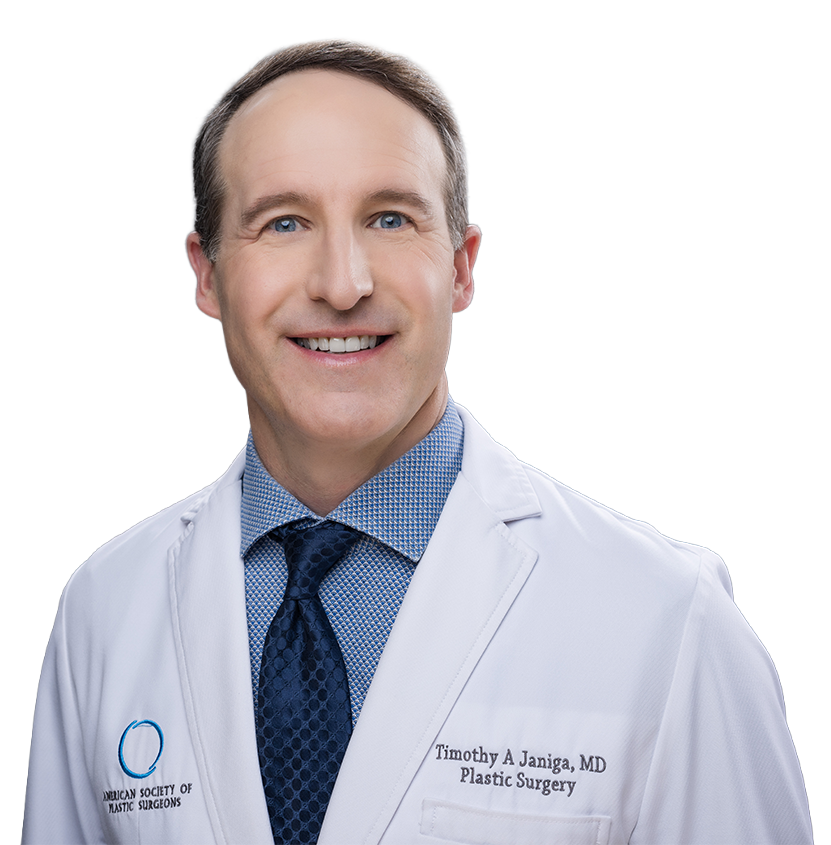
Dr. Timothy Janiga is a board-certified plastic surgeon with over two decades of experience and countless patient success stories. His calm, expert, and meticulous approach has transformed the lives of both cosmetic and reconstruction patients, helping them feel good in their bodies. Dr. Janiga is an expert in all aspects of plastic surgery and specializes in cosmetic facial surgery, body contouring, and breast surgery.

Most patients return to work within five to 10 days, depending on your profession and need for personal discretion. Swelling and bruising are to be expected for a week, though recovery varies and these symptoms can last from several days into the following weeks, and stitches also remain in for a week. During this time, you may need to wear a compression garment and eat a soft diet. It is also important to practice good oral hygiene to prevent infection risk. Keeping your head elevated by sleeping face-up with the head elevated for one to two weeks and avoiding strenuous activity, with heavier activity usually resumed within three to four weeks, will also help reduce swelling and alleviate discomfort. Discomfort is usually minimal and manageable with medication. Patients will also receive specific instructions for healing and may use cold compresses to help reduce swelling.
Patients will gradually see results as swelling subsides. Full results are expected in eight to 12 weeks and are permanent. After your chin enhancement, you can expect a more prominent chin to allow for better proportions and facial balance. However, during healing, you may see swelling all the way up to your lower lip or mouth. While this swelling can be a bit more significant, it’s important to allow your body to heal. Board-certified plastic surgeon Dr. Janiga will provide extensive information on when the swelling along the jawline is acceptable and when you may want to have it assessed by a medical professional.
While chin surgery on its own is not often combined with additional procedures, it can occasionally be used in tandem with services such as a facelift or nose surgery.
In a facelift, as a more comprehensive surgical procedure, patients can combine several surgeries into overarching facial balance.
A rhinoplasty, or nose surgery, can be a complementary procedure when combined with chin surgery, as those with a large nose may also have a small chin or undefined jawline. In this instance, the nose can be reduced and the jawline can be enhanced with chin implant surgery.
For those who have a less defined chin bone and have laxity in their neck, a neck lift can be a complementary combination to enhance youthfulness and revitalize the overall appearance.

We evaluate and treat patients who desire a chin augmentation in Reno or surrounding areas at our office. If you want to improve the look of your receding chin and enhance your facial profile, schedule a consultation today with board-certified plastic surgeon Dr. Timothy Janiga.
JanigaMDs is the only practice in Reno where patients can consult with both a board-certified dermatologist and a board-certified plastic surgeon in one visit.
Learn More
Dr. Timothy Janiga is a board-certified plastic surgeon with over two decades experience serving the Northern Nevada community. He has been awarded multiple "Top Doctor in Nevada" and patient satisfaction awards. He is a member of several organizations, including American Institute of Plastic Surgeons (AIOPS), American Society of Plastic Surgeons (ASPS), and American Society of Aesthetic Plastic Surgery (ASAPS), as well associated with establishments such as the Nevada State and Washoe County Medical Societies.

Founded in 2010, the team at JanigaMDs has been proven to provide the utmost care for all patients. With an almost 5 star rating over almost 700 reviews, JanigaMDs is the premier aesthetic practice in Northern Nevada.
Contact Us"*" indicates required fields
 Search